Why Erdős Problems Resist Ordinary Mathematical Progress
An Erdős problem often looks deceptively simple: a question about integers, graphs, or sets that can be stated in a few lines but has resisted years of serious effort. The difficulty is rarely a lack of calculation. Many of these problems sit at the edge of what existing methods can detect, where examples suggest a pattern but offer no clear route to proving it.
Progress can also stall because a promising idea may work only in special cases, while the full problem requires controlling infinitely many possibilities. Researchers must decide which patterns matter, which evidence is misleading, and whether a proposed argument contains a hidden gap. Computation can test millions of examples, but it cannot by itself turn repeated success into certainty. That gap between evidence and proof is precisely where AI-assisted mathematics becomes both promising and difficult.
What Counts as an AI-Assisted Mathematical Breakthrough?
A meaningful AI-assisted breakthrough does not necessarily mean that a system has produced a finished proof from scratch. It may instead identify a conjecture that mathematicians had not recognized, reveal a useful pattern in data, or suggest a connection between techniques that are usually studied separately. For an Erdős problem, finding the right statement can be substantial progress: a sharper conjecture can rule out unproductive approaches and point researchers toward the structure a proof must explain.
Proof and verification are stronger achievements, but they are different from generating an idea. An AI system might propose an argument, while a human checks each step or translates it into a formal proof assistant. That checking matters because plausible mathematical language can conceal an invalid assumption, an overlooked exception, or a step that works only for tested examples. The practical cost is significant as well: formalizing an informal insight may take longer than discovering it. The clearest breakthroughs therefore combine AI’s ability to search and suggest with human judgment about meaning, rigor, and generality.
The First Gains Come From Finding Better Conjectures

Suppose a computer examines thousands of examples of a sequence, graph, or set and notices that the expected pattern fails in one narrow range but becomes stronger under an added condition. That observation may be more valuable than another batch of confirmations. It can lead to a revised conjecture: one that is weaker than the original claim, but more likely to be true and more closely aligned with the structure of the problem.
This is where AI may make its earliest and most reliable contribution. Systems can compare large collections of examples, search for recurring relationships, and test variations that a mathematician might not have time to explore. But generating candidates is not the same as knowing which candidate deserves attention. A conjecture can fit every available example and still fail at a much larger scale, or describe a numerical coincidence with no useful explanation behind it. Human researchers must judge whether the pattern is mathematically natural, identify the mechanism that might support it, and decide whether proving the refined statement would illuminate the original Erdős problem. The gain is not automatic discovery, but a better map of where discovery may be possible.
Where Computation Meets Proof and Verification
Once a promising conjecture has been identified, computation can test its boundaries. A program may search for counterexamples, examine special cases, or measure whether a proposed pattern survives as the numbers grow. This is useful evidence, but it remains evidence. Even an enormous search checks only a finite region, and Erdős problems usually ask about infinitely many cases.
Proof begins when researchers find an argument that explains why the pattern must hold beyond the tested examples. AI can help by exploring possible lemmas, organizing cases, or suggesting analogies with known results. Yet a generated argument is not reliable simply because it sounds coherent. Each implication must be checked, including assumptions that may be invisible in ordinary language. Formal proof systems can strengthen this process by verifying that every permitted step follows from accepted rules, but translating an informal idea into machine-checkable form requires time, expertise, and precise definitions.
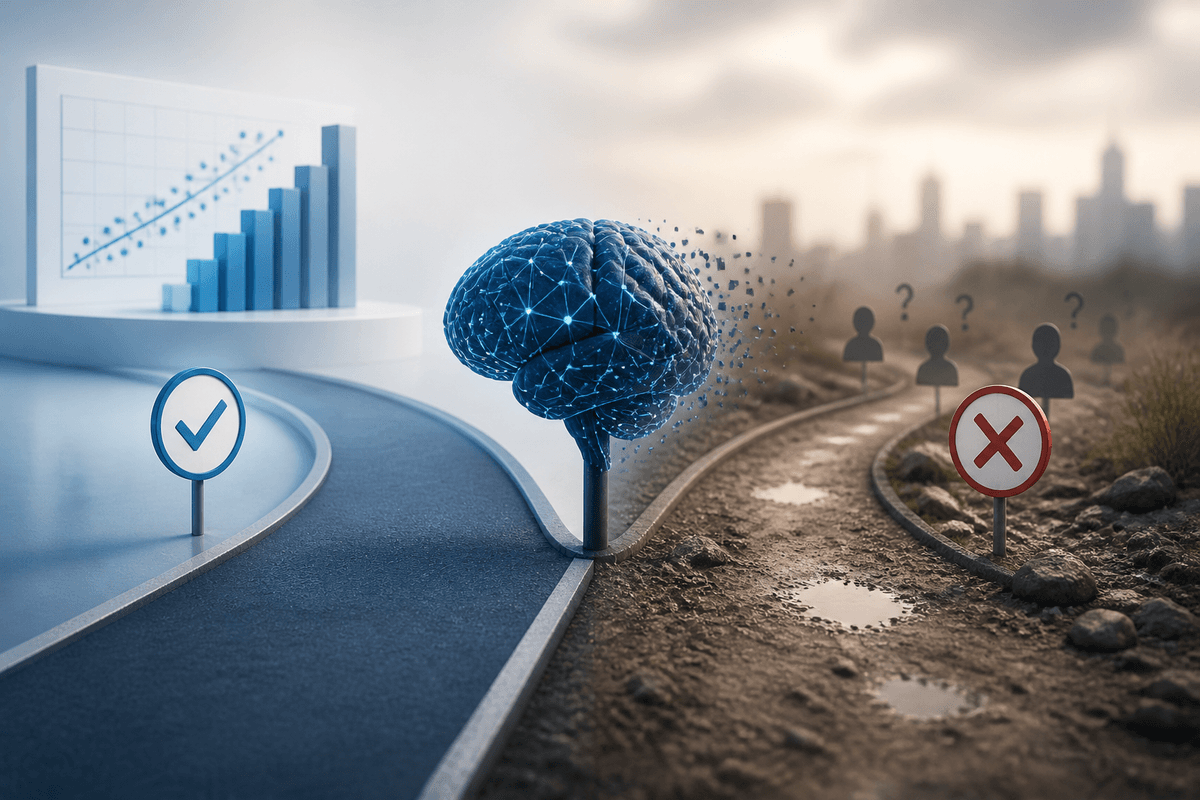
The most credible workflow therefore has distinct stages: computation discovers or challenges a pattern, mathematicians shape the proof strategy, and formal tools verify the finished argument. A failed search can still expose a false conjecture, while a verified proof provides something stronger than confidence: a result that can be inspected, reproduced, and extended.
Why Erdős’s Style Makes These Problems AI-Friendly

Many Erdős problems are AI-friendly for a practical reason: their statements use simple objects but generate an enormous space of possibilities. A question about coloring integers, arranging points, or finding patterns in a graph can be tested, transformed, and compared across countless examples. That gives computational systems a useful starting point. They can vary parameters, search for unusual cases, and detect relationships that are difficult to notice when the examples are examined one at a time.
Erdős also favored problems with a modular structure. A difficult question may contain smaller versions, related sequences, or links to familiar ideas in number theory and combinatorics. AI systems can search across large collections of mathematical results and propose connections between these pieces, especially when the relevant clues are scattered across different areas. The accessibility of the statement does not imply accessibility of the proof. A system may find many suggestive patterns without identifying the one structural idea that explains them. Erdős problems are therefore well suited to AI exploration, but their final solutions still depend on recognizing which patterns deserve mathematical meaning.
What Humans Still Need to Supply
Promising patterns do not explain themselves. Human mathematicians still have to determine what those patterns mean, why they matter, and whether they point toward something genuinely useful. They decide which definitions are worth pursuing, recognize when a conjecture reflects the deeper structure of an Erdős problem, and discard results that depend too heavily on arbitrary examples or obscure technical details. Previous failed approaches also provide valuable context, as do genuinely new connections and simplified versions that might open a path toward a broader proof.
That judgment extends to the standards used to explain and validate a result. Mathematical work becomes more useful when other researchers can follow its mechanism, examine its assumptions, and apply the underlying idea to related problems. Someone still has to decide when the evidence is strong enough to justify pursuing a conjecture, when computation has reached its useful limit, and whether a formal proof captures the mathematics being investigated rather than merely satisfying a technical verification. Faster searches may shorten the path to a promising result, but interpretation, formalization, and collaboration remain human responsibilities. Turning a possible solution into mathematical knowledge still requires understanding what the result actually says and why others should trust it.
A New Era of Collaboration, Not Automatic Proof
A mathematician working with AI may increasingly begin with a ranked list of conjectures, counterexamples, or possible proof strategies rather than a blank page. That changes the workflow without changing the standard of success. The important question remains whether the proposed result is true, why it is true, and whether others can verify and use the argument. AI may shorten the search for ideas, but it cannot remove the need for careful definitions, proof, and mathematical judgment.
For Erdős problems, this points toward collaboration rather than replacement. Systems can explore broader spaces and expose patterns that humans would miss, while mathematicians decide which discoveries are meaningful and build explanations around them. The likely result is not automatic proof, but a faster, more experimental form of research in which computation, conjecture, and verification reinforce one another.