The promise: faster work, cheaper business
The pitch is straightforward: if AI can draft emails, summarize meetings, write code, analyze tickets, and generate proposals in minutes, the business should get cheaper to run. Managers see early wins in cycle time and throughput, and teams report they can “do more with the same headcount.” On paper, that looks like a clean path to lower operating costs and faster delivery.
But faster work is not the same thing as lower spend. Many organizations discover that the first wave of gains shows up as speed, responsiveness, or higher output rather than fewer dollars leaving the company. AI also introduces new line items—licenses, usage-based fees, and governance work—that can quietly offset the initial efficiency.
Time saved doesn’t automatically become cost saved
Picture a team that saves 20 minutes per customer ticket with AI-assisted replies. Unless that time lets you remove a shift, reduce overtime, or avoid hiring the next support rep, the cost line won’t move. Most organizations don’t “sell back” minutes to the budget; they redeploy them. The same headcount stays on payroll, and the organization simply answers more tickets, handles more edge cases, or raises service levels.
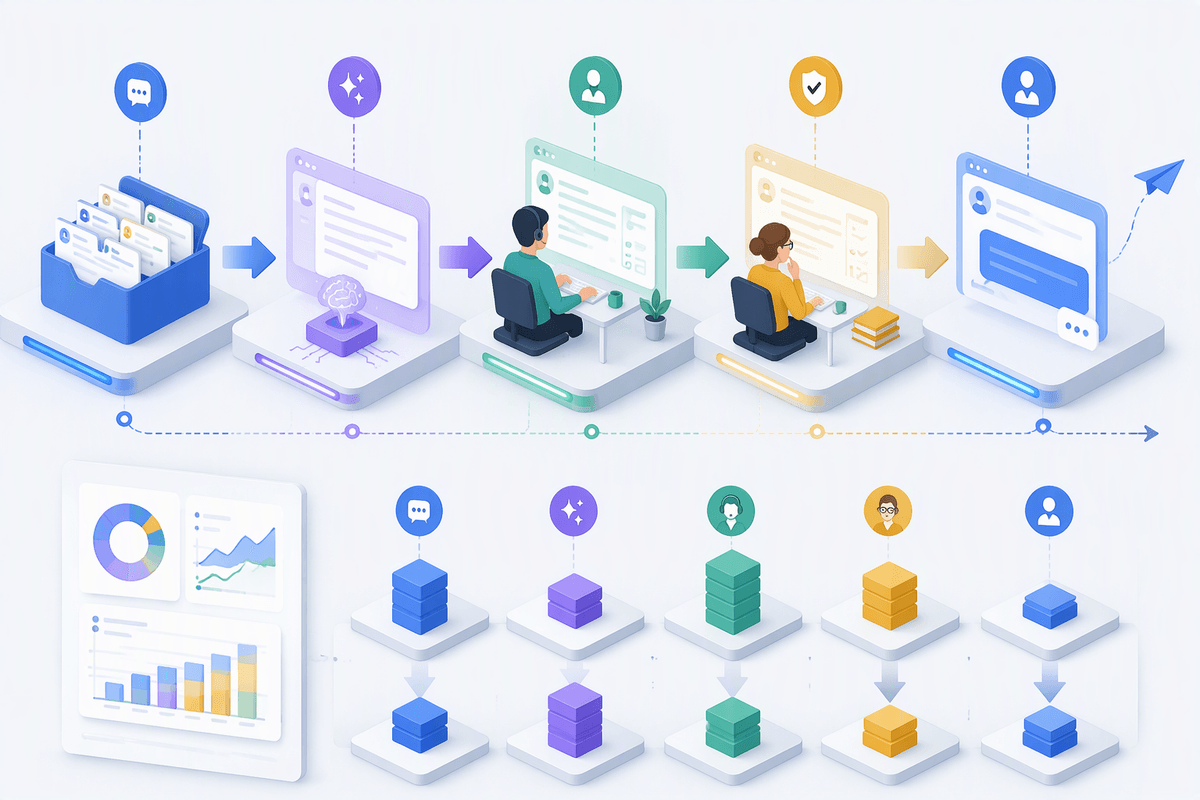
Time savings also get absorbed by coordination and rework. When it’s easy to produce a first draft, people ask for more versions, more customization, and faster turnaround. Meetings fill the gap because decisions still need alignment, and speed can increase the number of decisions in play. On top of that, some of the saved time shifts to other roles—reviewers, approvers, or subject-matter experts—so the task looks cheaper in one seat but not across the full workflow.
The practical test is blunt: what expense will you actually reduce, by when, and what policy will make that reduction happen?
Bottlenecks move: AI accelerates one step
You can see the bottleneck shift in a familiar place: one person can now generate ten options, but the team can still only approve one. A product manager can produce specs faster, but engineering capacity, QA, and release windows don’t expand. A legal team can review more vendor contracts, but only if procurement and security can keep pace with intake and due diligence. The “fast step” stops being the constraint, so the queue simply forms downstream.
This is why isolated productivity metrics can mislead. If AI cuts drafting time by 50% but review time stays the same, total cycle time may barely change, and total cost may not change at all. In some workflows, the review step actually grows: reviewers must verify facts, check citations, test edge cases, and ensure the output matches internal policy. That work is harder to parallelize and is often done by higher-cost roles, which can absorb the apparent savings.
Fixed costs, minimum staffing, and lumpy savings
A common surprise is that many costs are fixed over the time horizon leaders care about. Rent, core software contracts, managed services, and baseline cloud commitments don’t shrink because a team writes faster emails. Even within payroll, you often have minimum staffing to cover hours, separation of duties, on-call rotations, and institutional knowledge. If a finance team needs two people to close the books safely, cutting each person’s effort by 30% doesn’t let you cut one role; it just makes the close less painful or frees capacity for new requests.
That makes savings “lumpy.” You don’t get a smooth 10% cost reduction for a 10% productivity gain. You get nothing until you cross a threshold that allows a real structural change: remove a shift, consolidate queues, eliminate a vendor, or avoid the next hire. Those thresholds can be delayed by seasonality and growth; demand often rises to fill the new capacity. The constraint isn’t whether minutes were saved, but whether the organization is willing to change staffing plans, service levels, or scope to convert capacity into a smaller cost base.
Quality, risk, and compliance add new overhead

A familiar pattern shows up once teams move beyond a pilot: the fastest output is the least trusted output. When AI produces customer-facing copy, analyses, or product requirements, someone still has to confirm what’s true, what’s permitted, and what could create downstream liability. That means new layers of checking—spot-checking facts and numbers, validating sources, testing edge cases, and confirming the output matches internal policy and brand standards. In many organizations, that review falls to higher-cost roles like senior ICs, managers, legal, security, or compliance, so minutes saved in drafting can be replaced by minutes spent on assurance.
Risk also arrives in new forms that don’t show up in “time per task.” Teams may need to redact sensitive data, route certain prompts through approved systems, retain records for audits, and document how outputs were generated and approved. When regulation or contractual terms apply, the organization often adds gates rather than removing them. The practical constraint is that these controls are hard to automate quickly, and building them takes time, tooling, and ongoing monitoring.
Adoption costs: training, change, and tool sprawl
The rollout usually starts with “it’s just a tool,” and then it behaves like a process change. People need time to learn what good prompts look like, when to trust outputs, and when to stop and escalate. Managers spend cycles rewriting guidelines, updating templates, and calibrating review standards so teams don’t ship faster but sloppier work. Even when the tool is intuitive, the organization pays for experimentation: mistakes, false confidence, and the extra back-and-forth required to converge on a reliable way of working.
Tool sprawl is the quieter cost. Different functions adopt different copilots, plug-ins, and niche apps, each with its own billing model, admin console, and data rules. Finance sees more small subscriptions, security sees more vendor reviews, and IT inherits identity, access, and retention questions that were never in the pilot. The constraint is that consolidation takes political capital and time; until it happens, savings from speed can be offset by a larger, messier stack that costs more to run and harder to govern.
Turning productivity into savings: what to measure
You see “hours saved” dashboards everywhere, but costs move when capacity turns into a decision: hire less, buy less, or ship the same outcomes with fewer paid inputs. Track throughput and unit economics together: cost per resolved ticket, cost per compliant contract, cost per feature shipped, and the mix of work (new volume versus the same volume faster). Add a “review tax” metric: reviewer minutes per AI-produced deliverable, escalation rates, and rework loops, since those often migrate to higher-cost roles.
Then force a time-bound conversion test: which budget line changes on a specific date, and what policy makes it real (headcount backfill rules, overtime caps, vendor reductions). Without an explicit conversion mechanism, productivity gains usually become higher service levels or more scope—not lower spend.