Why AI reports still need human hands
You can get a clean-looking draft from an AI tool in minutes, then lose hours making it safe to share. That gap surprises teams because the draft feels “finished,” but it isn’t owned. Someone still has to decide what question the report answers, what audience it’s for, and what claims are allowed without evidence.
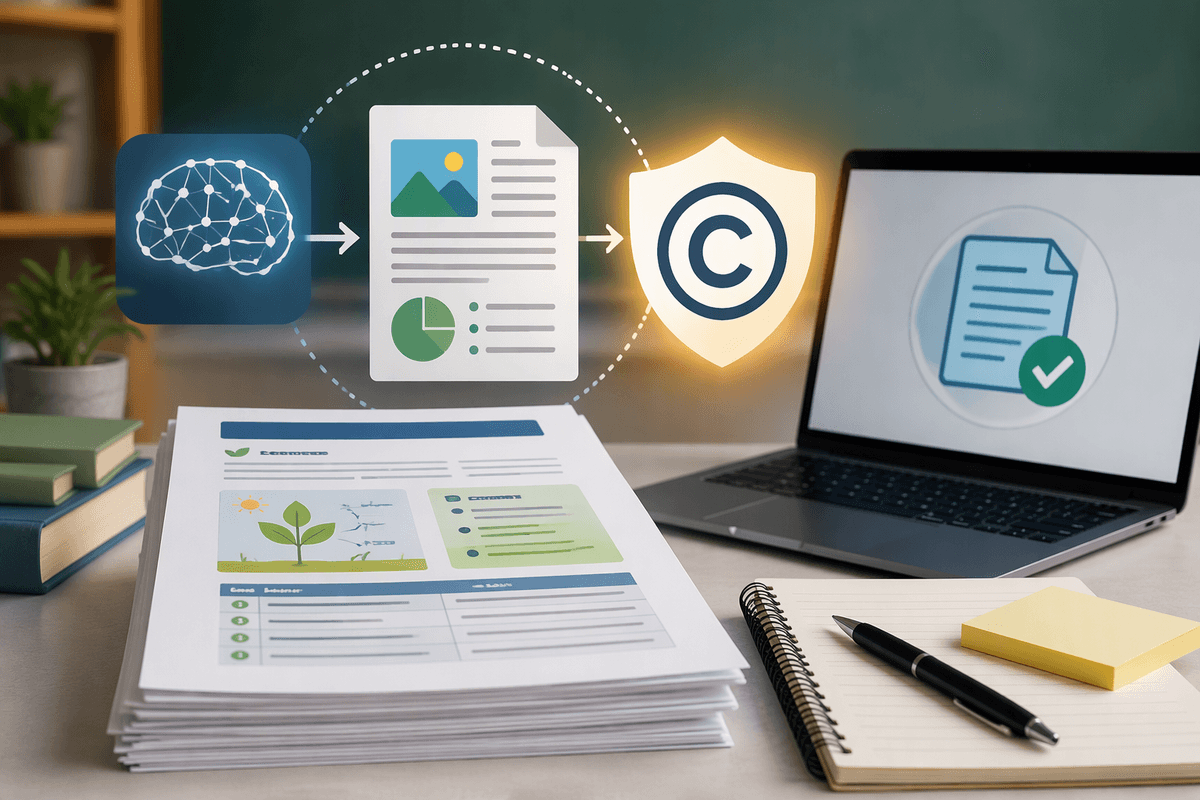
AI can compress and rephrase, but it can’t take responsibility for accuracy, sourcing, or business impact. Humans still need to pick the right data, add missing context, verify key numbers and quotes, and remove confident-sounding errors. They also handle tone, sensitivity, and approvals—steps that cost time, but prevent rework, reputational damage, and compliance problems.
What counts as a “good” report anyway?

A good report isn’t the one that reads smoothly. It’s the one that helps someone make a decision with an appropriate level of confidence. That means it answers a clear question, fits the audience’s level of detail, and separates what you know from what you’re inferring. If a reader can’t tell where the numbers came from, what time period they cover, or what “success” looks like, the report is effectively unfinished—even if the prose is polished.
In practice, “good” usually includes a short takeaway, the few metrics that actually drive the conclusion, and enough method and sourcing that another person could reproduce or challenge it. It also names constraints: missing data, small sample sizes, shifting definitions, or assumptions that could swing the outcome. Adding that clarity takes time because teams often have to negotiate scope and definitions before the writing is even the hard part.
Getting the inputs right: data, context, and prompts
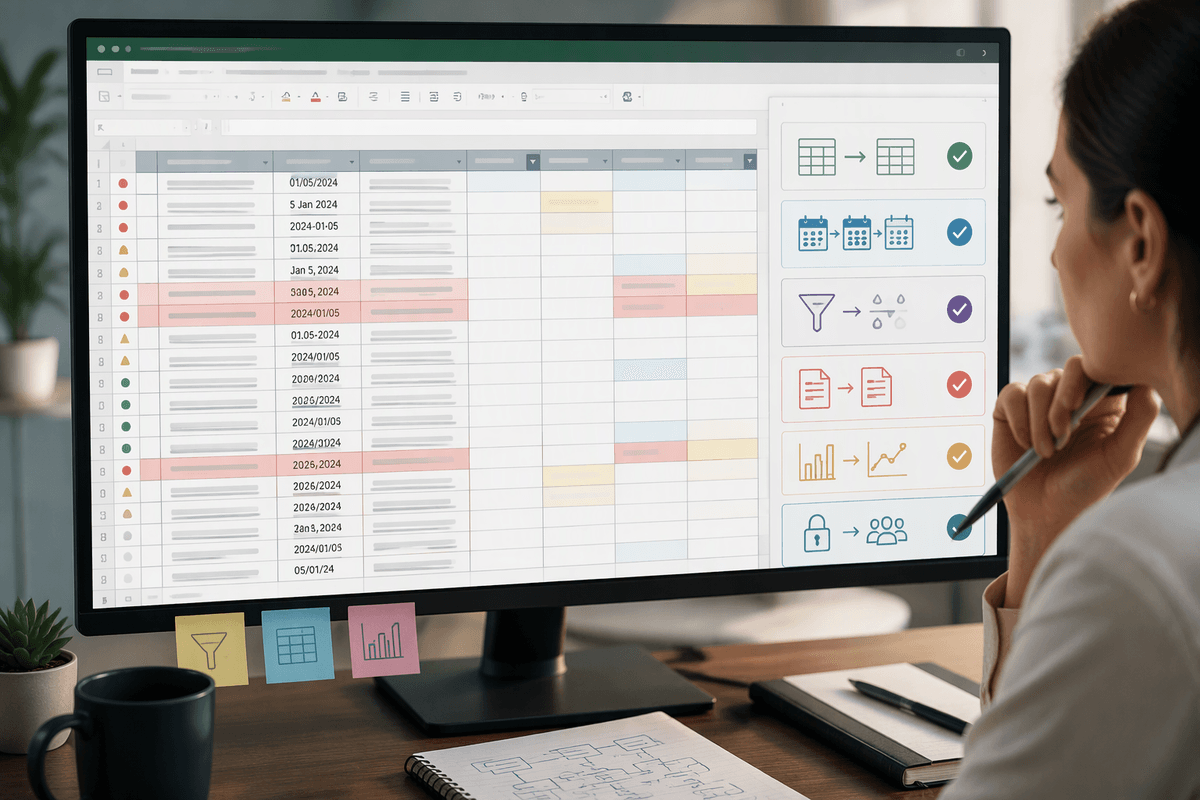
The fastest way to waste time with AI is to start with vague inputs. If the model doesn’t know the time window, geography, definitions, and decision the report supports, it will fill gaps with plausible defaults. Before prompting, lock down the basics you’d put at the top of a brief: the question, the audience, the “definition of done,” and the allowed sources of truth (dashboards, spreadsheets, CRM exports, prior reports). Then sanity-check the data itself: are you looking at last week or last quarter, gross or net, bookings or revenue, unique users or sessions?
Prompts work best when they behave like constraints, not inspiration. Provide the key tables or summaries, name metric definitions, and specify formatting (sections, bullets, required caveats). Ask the model to list the assumptions it had to make and to flag any claims not directly supported by the provided data. Someone has to assemble clean inputs and resolve mismatched definitions before the writing can be trusted.
Where AI helps most—and where it misleads
You’ll feel AI’s value most when the work is structure-heavy: turning messy notes into a consistent outline, generating first-pass summaries of long documents, drafting options for headlines and executive takeaways, and translating the same findings for different audiences. It’s also strong at patterning: “use this template, keep the tone neutral, include a risks section, and put numbers in a table.” That kind of repetition is where teams save real time.
The trouble starts when the task depends on truth rather than form. If your inputs are incomplete, AI will often supply missing context as if it were a fact, blend time periods, or generalize from one metric into a broader conclusion. It can quote statistics that were never in your dataset, misread a table, or imply causation because it sounds like a normal business story. It also tends to smooth over uncertainty, which is exactly what decision-makers need to see.
A useful working rule is: let AI draft the container, but make humans own the contents that could be wrong, controversial, or costly.
Review isn’t proofreading: verification and challenge steps
Most teams review AI drafts the same way they review human writing: fix awkward sentences, tighten the summary, ship it. That’s proofreading, and it misses the real failure modes. The review step has to behave more like a challenge process: “Which statements would hurt us if wrong, and what evidence do we have?” Start by marking every hard claim—numbers, rankings, timelines, competitor assertions, policy statements—and trace each one back to a source you control. If you can’t point to a table, system export, or approved reference, treat it as unverified, not “probably true.”
Then pressure-test the logic. Ask someone who wasn’t involved to restate the conclusion and the chain of reasoning in plain language, and look for hidden leaps like causation from correlation or “overall” claims based on one segment. Run spot checks where errors hide: units, percent vs percentage points, time windows, and definition changes. This costs time and focus, and it can feel slow when deadlines hit, but it’s cheaper than correcting a decision that was made on a confident mistake.
Making it repeatable: roles, approvals, and audit trails

You’ve probably seen the same failure twice: a good analyst uses AI carefully, then a rushed week later someone else copies the prompt, swaps in new numbers, and ships a report that can’t be defended. The fix isn’t “be more careful.” It’s making ownership visible. Assign roles the way you would for a dashboard: a data owner who confirms extracts and definitions, a report owner who controls scope and conclusions, and a reviewer who is allowed to block publication. If approvals are fuzzy, AI just makes it easier to move fast in the wrong direction.
Build a lightweight audit trail so the next person can reconstruct what happened. Keep the input snapshot (tables, time window, filters), the prompt and model settings used, the sources of truth for each key claim, and a short change log of what humans edited and why. This adds friction and storage overhead, and it can feel heavy for “quick updates,” but it’s what turns one-off hero work into a process you can scale without guessing.
A practical checklist before you ship the report
Before you ship, run a short checklist that treats the draft like a release, not a document. Confirm the question, audience, and time window are stated and match the data pull. For every key number or claim, attach a source you control (export, dashboard view, approved reference) and spot-check units, definitions, and percent vs percentage points. Mark assumptions and gaps explicitly, and remove any “industry facts” you didn’t verify. Have a second person restate the conclusion and flag leaps in logic. Finally, log inputs, prompts, edits, and approvals so the report can be defended later.