AI’s energy surge, and why it matters now
A familiar pattern is showing up in utility filings and local planning meetings: big new data centers arrive, and the conversation quickly shifts from “jobs and innovation” to transformers, substations, and whether the grid can keep up. AI is a major reason. Training and running AI models can require dense, always-on computing, which turns into steady electricity demand that competes with homes, factories, and electrification goals like EVs and heat pumps.
It matters now because these projects can move faster than power plants and transmission lines. Upgrades take years, permitting is messy, and someone pays during the buildout—through higher rates, special contracts, tax incentives, or public spending—often before the promised economic benefits are fully clear.
What exactly drives AI electricity use?

Picture the same warehouse-sized building: one version hosts ordinary web services, the other is packed with AI chips. The second one tends to pull far more power because AI work is dominated by specialized processors running at high utilization for long stretches, not short bursts. Training a large model is the headline event, but the day-to-day draw often comes from “inference”—serving millions of user queries, recommendations, and generated content—where demand scales with traffic and product features.
Electricity use is also driven by the support system around the chips. Much of the energy becomes heat, so cooling can add a significant extra load, especially in hot climates or in older facilities that rely on less efficient chillers. Even small design choices matter at this scale: higher-reliability power supplies, backup generators, and redundant equipment reduce downtime risk but raise baseline consumption and peak demand. The efficiency upgrades and grid-friendly designs cost money upfront, and not every operator is rewarded for making them.
When data centers connect, who pays first?
When a large data center asks to connect, the first bill is often for “make-ready” work: new substations, larger transformers, feeder upgrades, and sometimes transmission studies that reveal even bigger needs upstream. Who pays depends on rules that most customers never see. In some regions, the developer funds a share of the direct connection equipment, while the utility spreads broader upgrades across all ratepayers on the theory that a stronger grid benefits everyone. In others, utilities offer special tariffs where the data center commits to minimum payments for years, effectively pre-paying part of the capacity it will use.
The short-term pressure shows up in timing. Costs are incurred during construction, but savings or new revenues arrive later, and only if the project actually ramps as promised. If a campus delays, scales back, or leaves, regulators have to decide whether remaining customers eat “stranded” costs or whether contracts truly protect them.
The hidden bill: water, land, and local tradeoffs
In the local hearings, electricity is only half the spreadsheet. Many modern facilities use large volumes of water for cooling, either directly through evaporative systems or indirectly through power plants supplying the grid. In a wet region, that can look like a manageable utility detail; in a drought-prone county, it becomes a competition with farms, households, and rivers that already run hot in summer. Operators can shift to air cooling or closed-loop designs, but that often costs more upfront and can reduce efficiency on the hottest days—exactly when the grid is strained.
Land use and logistics add another layer. A single campus may need new road access, widened rights-of-way for transmission, and buffer zones for noise, diesel backup generators, and security. Property-tax gains can be real, but so can public costs for permitting, emergency services, and water infrastructure sized for peak demand. The tradeoff is rarely “yes or no”; it is who gets enforceable conditions, and who is left with impacts that are hard to price.
Carbon costs: consumers, companies, or taxpayers?
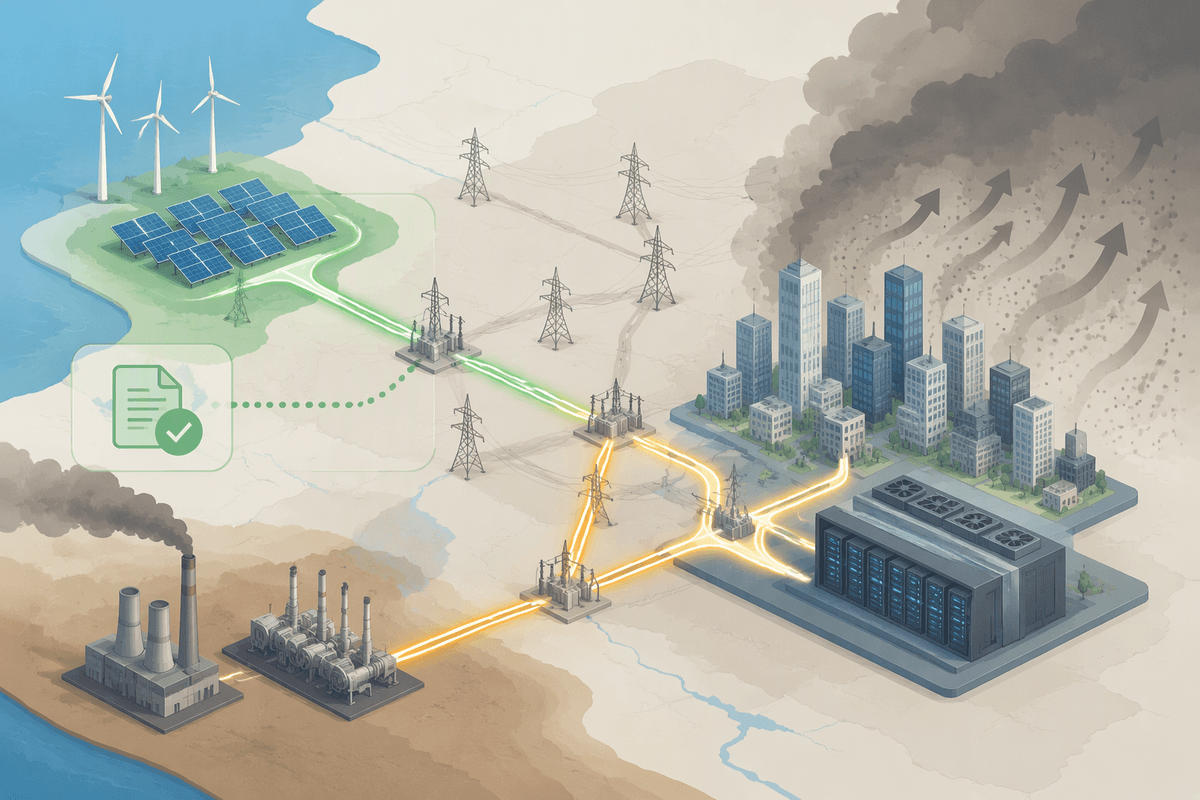
A common moment of confusion comes when a utility says a new data center will “use clean power,” but the region’s emissions still rise. That gap is often about accounting. A company may buy renewable credits or sign a contract for new wind or solar, while the physical grid still leans on gas plants at night or during peaks. If the added demand drives new fossil generation or delays coal retirements, the carbon cost shows up across the whole system, not just on one customer’s invoice.
Who pays depends on policy design. Ratepayers can pay through higher fuel costs and capacity charges embedded in bills. Taxpayers can pay through production incentives, tax abatements, or publicly backed transmission. Companies can pay when regulators require “additional” clean supply, carbon fees, firm-clean capacity, or penalties if load grows faster than promised. The practical difficulty is measurement and enforcement: tracking hourly emissions, verifying contract claims, and assigning responsibility adds administrative cost and invites loopholes unless rules are clear.
Fairness questions: who gets benefits vs. burdens
Consider two neighbors on the same utility: one is a renter in an older building with little control over efficiency, the other is a data-center campus negotiating a custom tariff. If grid upgrades are rolled into general rates, the renter can help fund new wires and substations while seeing few direct benefits beyond reliability. If upgrades are pushed onto the developer through interconnection charges and long-term commitments, the campus may still benefit from public incentives, discounted land deals, and faster permitting, which can shift costs back to taxpayers.
Local burdens also fall unevenly. Communities hosting the facility often get construction disruption, water stress, generator noise, and higher peak-demand risk, while many of the digital services and profits flow elsewhere. Even “jobs” can be thinner than expected once construction ends, because highly automated sites employ fewer people than a factory of similar size. Fairness questions become concrete: Who has to pay upfront, who gets binding guarantees, and what happens if the load leaves?
What would “paying your way” look like?
A familiar version of “paying your way” is simple: if a data center triggers a substation, it funds it, signs a long-term minimum-bill contract, and posts security so costs don’t slide to other customers if the load shrinks. A stricter version adds performance: higher charges for peak demand, credits for real-time load flexibility, and penalties if promised efficiency or ramp schedules miss. On carbon, it can mean matching new demand with verifiable, additional clean supply on an hourly basis, not annual claims.
Hourly tracking, enforceable contracts, and local impact fees raise administrative burden and can slow projects. But the payoff is clarity: when the bill shows up—rates, taxes, water systems, emissions—it lands where decisions are made, not where bargaining power is weakest.